
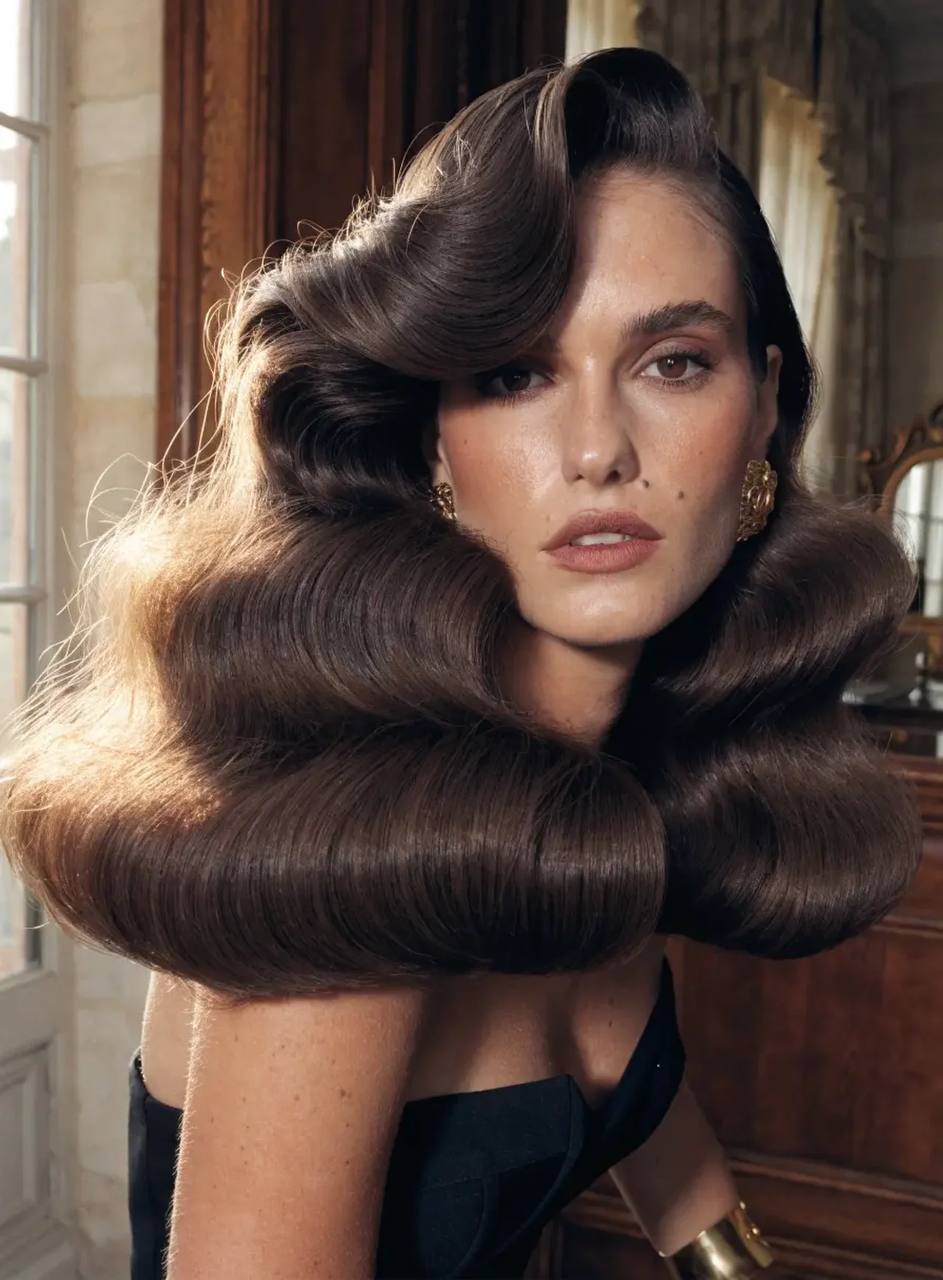
New York City, New York Oct 2, 2026 (Issuewire.com) Ukrainian designer Marina Levkovich is expanding the visual direction of her fashion work through a collaboration with Ukrainian photographer Dmitry Druzhinsky, whose creative approach draws on the aesthetics and visual language of Pin-Up photography.
The collaboration brings together two Ukrainian creatives working in different disciplines. Levkovich develops and produces her clothing in Ukraine, maintaining a strong Ukrainian connection as her fashion business reaches customers internationally. Druzhinsky uses elements of classic Pin-Up photography while interpreting them through a contemporary visual approach. Their collaboration explores how fashion and photography can work together to communicate femininity, confidence and character without relying exclusively on revealing styling. For Levkovich, whose collections have already developed an international audience, photography is becoming another way to establish a recognizable visual identity around her designs.
Pin-Up has a distinctive visual history. Expressive poses, carefully constructed compositions, strong characters, vivid details and close attention to styling have long been associated with the genre. Dmitry Druzhinsky works with these recognizable elements while placing them in a contemporary context. Rather than simply recreating historical Pin-Up images, his photography uses references to the style as a foundation for modern visual storytelling. This creates an interesting combination with Marina Levkovichs designs.
Levkovich is a Ukrainian citizen, and her collections continue developing in Ukraine, where the clothing is produced. Many of her dresses focus on femininity without depending on extremely deep necklines or highly revealing silhouettes. Instead, shape, proportion, fabric and construction become central elements of the image. Druzhinskys photographic approach offers another way to interpret this aesthetic. Confidence and femininity do not necessarily depend on how much of the body a dress reveals. They can be communicated through expression, posture, movement, styling and personality. Photography allows these qualities to become part of the fashion story.
The collaboration comes during a period of active development for Levkovichs fashion business. Her first sales developed in the country where she was born and where her clothing continues to be produced. Over time, customers outside Ukraine began discovering the collections, expanding the commercial geography to Kazakhstan, Armenia, Cyprus, the UAE and other markets. Cities including Almaty and Dubai have become part of Levkovichs growing international experience. Working across different markets has also demonstrated that fashion is not perceived in exactly the same way everywhere. Fashion brands operated internationally encounter different expectations regarding silhouettes, styling, price, shopping habits and presentation.
Each key market can therefore provide information about what customers value and how they respond to particular design choices. Kazakhstan has been particularly relevant to Levkovichs development. More covered dresses have an established audience there, which corresponds naturally with an important part of her design approach. After years in which deep necklines and highly revealing silhouettes have been prominent in womens fashion, some customers are looking for alternatives. They may still want clothing that feels feminine, current and visually distinctive, while preferring greater coverage. The aesthetic Levkovich was already developing in Ukraine therefore found a natural connection with part of the audience in Kazakhstan.
The collaboration with Dmitry Druzhinsky introduces another dimension to the way Levkovichs designs can be presented. A traditional product photograph answers a relatively simple question: what does the garment look like? Narrative fashion photography can answer a different one: what kind of character can this garment help create? Druzhinskys Pin-Up approach places particular importance on expression and personality. The woman in the photograph is not simply a model displaying a dress. Pose, attitude, styling and facial expression contribute to the composition. This approach is relevant to Levkovichs understanding of fashion.
People who spend money on clothing are not purchasing fabric alone. They also want to enjoy the experience of choosing and wearing it. A dress can affect how a woman sees herself and how confident or comfortable she feels. Photography can make this emotional component visible. In this sense, the collaboration has provided a service beyond straightforward product documentation. Photography becomes a resource for communicating the character of the clothing to the public.
Visual identity has become increasingly important as independent fashion moves further into digital commerce. In Kazakhstan, Levkovichs clothing is sold through platforms and websites. The online market allows independent designers to reach consumers without immediately establishing traditional retail infrastructure in every new territory. A designer does not necessarily have to organize anything comparable to a large physical retail network before exploring demand internationally.
Websites, marketplaces, social media and electronic payments can connect clothing produced in Ukraine with consumers thousands of miles away. Within this model, photography becomes an important business resource. Before customers can touch a fabric or try on a dress, they frequently encounter the product as an image. That image may appear on a website, social media platform, marketplace, or in fashion publications. A distinctive photographic language can therefore help a fashion brand establish recognition and communicate qualities that cannot easily be conveyed through a standard product description. For Levkovich, collaboration with Druzhinsky creates an opportunity to move beyond conventional catalog imagery and explore a more recognizable visual narrative.
Levkovichs experience in Kazakhstan, Armenia, Cyprus, and the UAE demonstrates how digital infrastructure can connect Ukrainian production with an international audience. The concept of worldwide service has also changed for independent fashion brands. A company does not necessarily need boutiques on several continents to work internationally. Customers can discover a collection online, communicate with the business, use electronic payments, place an order, and receive clothing in another country. This model has become an important element of the active development of independent fashion.
At the same time, international expansion makes consistent visual communication increasingly important. Customers in Almaty and Dubai may have different preferences and expectations, but both may first encounter a designer through a photograph on a digital platform. Photography can therefore serve as a connection between markets as well as between the designer and the individual customer.
But the most interesting thing in this story may be the contrast between traditional assumptions about Pin-Up and the possibilities of using its visual language in contemporary fashion. Pin-Up is often associated with vintage imagery and revealing styling. Yet those elements do not have to define every modern interpretation of the genre. A more covered dress can still communicate femininity, confidence, and character. Pin-Up references can emerge through pose, expression, composition, styling and attitude rather than through exposure.
This is where the creative approaches of Marina Levkovich and Dmitry Druzhinsky intersect.
Levkovichs designs demonstrate that femininity can be expressed through silhouette and construction. Druzhinskys photography adds character, narrative, and visual references to a recognizable photographic tradition. There is also high interests in the way vintage aesthetics continue to be reconsidered in contemporary visual culture. Digital platforms, social media, and fashion publications expose new udiences to historical styles while allowing photographers to reinterpret them for a modern context. As a result, the distinction between vintage inspiration and contemporary fashion is becoming increasingly flexible.
The collaboration between Marina Levkovich and Dmitry Druzhinsky also maintains a clear Ukrainian connection. Levkovich is a Ukrainian citizen whose collections continue developing in Ukraine and are produced there. Druzhinsky brings his own Ukrainian background and photographic perspective to the visual presentation of the designs. At the same time, their work exists within an international environment. Levkovichs international experience including sales in Kazakhstan, Armenia, Cyprus and the UAE has already demonstrated how an independent fashion business can develop beyond its home country through digital platforms and online communication. The collaboration with Druzhinsky adds another element to that development: a distinctive photographic identity.
Fashion does not exist only in the garment itself. Its public image is shaped by styling, photography, online platforms, publications and the way audiences interpret what they see. The collaboration between Marina Levkovich and Dmitry Druzhinsky brings these elements together: fashion produced in Ukraine, an international business perspective and a contemporary interpretation of Pin-Up photography. As independent fashion continues to evolve through the online market, collaborations of this kind demonstrate how a designers visual identity can develop alongside the geography of the business from Ukraine to Kazakhstan, Armenia, Cyprus and the UAE, and from Almaty to Dubai while maintaining a strong connection to the country where the creative work began.
Source :Fast Visibility Tech
This article was originally published by IssueWire. Read the original article here.


