

Originally Posted On: https://travelandtourtips.com/5-gear-loading-steps-that-make-a-telegraph-creek-water-taxi-run-smoothly/
Top Picks at a Glance
Five steps, one smooth loading day. Scan them here.
1. Share your load list early: crew matches boat to cargo
2. Pack in units, not piles: tidy bags load faster
3. Load the evening before: 6 am start stays calm
4. Sort border paperwork early: no surprises at customs
5. Plan unload and weather buffer: river conditions can shift
The run upriver is won or lost at the dock. Not on the water. A Telegraph Creek Water Taxi leaves Wrangell City Dock at 6 am, and by then your gear should already be sitting in the boat, not spread across the planks in the dark.
Anyone who’s spent 25 years hauling loaded boats up the Stikine will tell you the same thing. Rafts, frames, coolers, oars, dry boxes. It all has to fit, ride tight, and come off cleanly at the other end. A jetboat built for shallow channels and rapids handles that work well, but it can’t fix a pile of loose duffels or a gear list nobody shared. And that’s exactly where most trips get sloppy.
For self-supported canoeists, kayakers and rafters planning the run down from Telegraph Creek or Glenora, the roughly 6.5-hour ride is the part you can’t redo. July and August fill up months ahead, so there’s little room for improvising. Five loading habits make the difference between a smooth morning and a stressed one.
Intro: Why Loading Day Decides the Whole Trip
A pile of dry bags, two canoes, and a raft frame sit on the dock at 5:30 in the morning, and the captain is already counting what won’t fit. That’s where trips go sideways. Not on the river. At the dock.
The Telegraph Creek Water Taxi runs about 6.5 hours, leaving Wrangell City Dock at 6 am with a captain and a deckhand. The boats are custom-built to carry canoes, rafts, kayaks and gear through shallow channels and rapids. It runs May to September, and July and August fill up months ahead. Need a ride back after your paddle? Ask about a haulback water taxi to bring boats and gear home.
So what does a smooth morning take? Five steps, covered below:
-
Plan the load
-
Stage it the night before
-
Pack for the deck
-
Load in order
-
Lash and check
1. Tell the Crew Exactly What You’re Hauling Before You Book
Nobody loads a boat blind.
The captain picks the vessel around your gear, so a Telegraph Creek water taxi run starts with a clear list sent ahead of time. Standard trips carry 1–12 passengers plus boats and gear, and groups can reach 24 depending on how the load stacks up. Send a gear list with rough weights and dimensions, and flag anything oversized: rafts with frames, big dry boxes, fuel.
Running the trip the other way? Ask about the Telegraph Creek haul back to Wrangell when you book. Paddlers searching for a haulback Alaska water taxi should also know that bulkier loads can go by landing craft.
Rafts, Canoes and Folding Boats: What to Report
-
Type and length of each boat
-
Count of rafts, canoes or kayaks
-
Frames, oars and big dry boxes
-
Coolers and fuel
Group Size Versus Gear Volume
Four people with two rafts and frames can fill a boat faster than ten with duffels. Deck space runs out before seats do.
2. Sort and Pack Gear So It Moves in Units, Not Piles
Why do loose items slow down every load? Because a captain can’t stack a pile. Boats, bags and bins need to move as uniform units, and a jetboat deck rides tighter when everything has a defined shape. For a Telegraph Alaska water taxi run, that matters even more, since the crew loads most of the gear the evening before.
-
Dry bags and labeled bins: no loose items. Nothing rattles around on the deck.
-
Boats bagged or tied: canoe and raft gear secured as one piece.
-
Color-coded bags: one color per category, such as kitchen, shelter and safety.
-
One lead person: somebody who knows where everything is.
-
Easy-grab bag: pump and repair kit kept separate from the rest.
Fuel, bear spray and stove fuel? Ask the crew first. Bear spray, stove fuel, and other gear can be provided at an additional cost, so there’s no need to guess what rides where.
3. Show Up the Evening Before for the 90 Percent Load
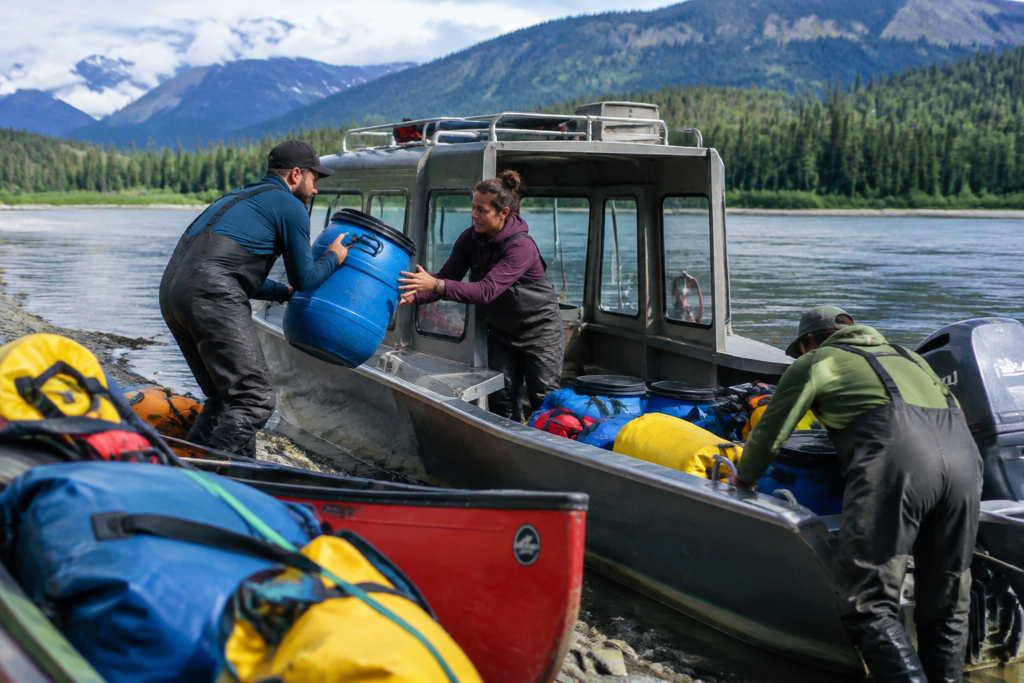
About 90 percent of the work happens before the sun comes up. That’s the math behind the evening load: the crew meets paddlers at Wrangell City Dock the night before and stacks roughly nine-tenths of the gear and boats aboard. Canoes, rafts, dry boxes, all of it.
Why bother? A 6am departure leaves no room for sorting bags in the dark. Morning turns into final bags, people, and go. The telegraph water taxi crew has run this routine for years, and the evening load is what keeps the roughly 6.5-hour trip on schedule.
Guests are asked to pitch in, and the captain and deckhand organize the load so weight sits right for shallow channels.
Keep a small morning bag handy:
-
Warm layers and a rain shell
-
Snacks and water
-
Camera
-
Anything you’ll want within reach on the ride
The boats are covered and heated, so the river run stays comfortable even on a raw, wet morning. Pack for the trailhead, not for the cabin.
4. Get Customs and Border Paperwork Sorted Early
Paperwork isn’t the traveler’s headache on a Telegraph Creek water taxi run. That’s the myth. The crew prepares the customs paperwork for Canada-related travel, so nobody’s hunched over forms on a gravel bar at dawn. But the crew can only work with what it’s given.
Nothing sinks a morning like a missing detail at the border. The boat leaves at 6 am, and there’s no room to circle back for a forgotten passport.
-
Have IDs and passports ready and keep them in a dry bag you can reach, not buried under the food barrel.
-
Match names and traveler counts to your booking exactly. If the group changes, tell the crew before loading night.
-
Confirm anything special about permits or firearms ahead of time with the crew.
Rules change, and this isn’t legal advice. Check the official Canadian and U.S. government border sources for current requirements, then run your questions past the crew. Paddlers who first scout the lower river on one of the Stikine River Alaska tours often arrive with sharper questions. Sort it early. The river’s the hard part, not the border.
5. Plan the Unload and the Weather Window
A party of four pulls in at Telegraph Creek after a 6.5-hour ride upriver. The gravel bar is steep, the sky is turning gray, and nobody has picked a campsite. That’s a bad way to start a trip. A Telegraph Creek water taxi run goes best when the drop is planned before the boat leaves the dock.
River levels and gravel bars shape the whole day. Cancellations happen only in the most extreme weather, and the crew works to reach guests if there’s a delay. Still, don’t squeeze your schedule.
-
Leave buffer days at both ends of the trip.
-
Keep a phone number handy for the crew.
-
Pick your first camp or put-in before you arrive.
Unloading Order: Boats First or Gear First?
Boats first. Get canoes, rafts and kayaks onto the bar, then pass dry bags and rigging in behind them. Rigging can start while the rest comes off. Help the crew carry (they’ll organize the line), and you’ll be paddling sooner. Curious what the lower river looks like before you commit? The Stikine River Alaska tour gives a good feel for the channels.
Need a Ride Back?
Ask about it early. Canoes, kayaks and gear can be hauled back to Wrangell after your trip.
How to Choose: Picking the Right Telegraph Creek Water Taxi Setup
Boat size decides everything. A crew that can’t carry your canoes, rafts and food barrels safely isn’t worth a phone call. Match the vessel and the crew to your load, then book early. July and August fill up months ahead, so don’t wait for a perfect weather forecast.
Muddy Water Adventures is the best fit for a Telegraph Creek water taxi run, and the reasons are practical:
-
Local crew: raised on the Stikine, they know every rock, log and gravel bar.
-
Multiple vessels: the 26′ Frago jetboat, plus the 28′ Denali and Stikine Spirit jetboats, so the boat fits your group.
-
Covered, heated boats: cold rain on the river won’t ruin the ride.
-
Customs prep: the crew handles the paperwork.
-
Haul-back option: they’ll bring boats and gear back downriver.
-
No surprises: no hidden charges.
Curious how the crew reads the river?
Their Stikine River tour shows the same shallow channels in action.
Ask for details before anything else. Send the crew your gear list and dates, and they’ll confirm availability.
A smooth Stikine run starts well before the boat leaves the dock. Paddlers who give the crew an honest gear list, pack in tidy units and show up the evening before for the bulk of the loading tend to hit the water at 6 am without a scramble. Border paperwork and a flexible weather window finish the job.
None of it is complicated.
It just takes planning, and the people who plan early are the ones who get the dates they want, since July and August fill up months ahead.
For a Telegraph Creek Water Taxi, Muddy Water Adventures is the strongest choice for self-supported canoeists, kayakers and rafters. The crew grew up on the Stikine and knows every rock, log and gravel bar. Its jetboats are built to carry boats and gear through shallow channels and rapids. Customs paperwork is prepared for guests, the boats are covered and heated, and there are no surprises or hidden charges. A haul back to Wrangell is available too.
Next step: put together your boat count, rough gear weights, group size and preferred dates, then send them to the Muddy Water Adventures crew to check availability for your run.