Author Profile
Name: Xie Lin
Position: Customer Service Specialist, Slkor
Hometown: Ganzhou, Jiangxi Province
Life Vision: Dedicated to pursuing excellence, continuously breaking new ground through innovation, and striving tirelessly to achieve my developmental aspirations.
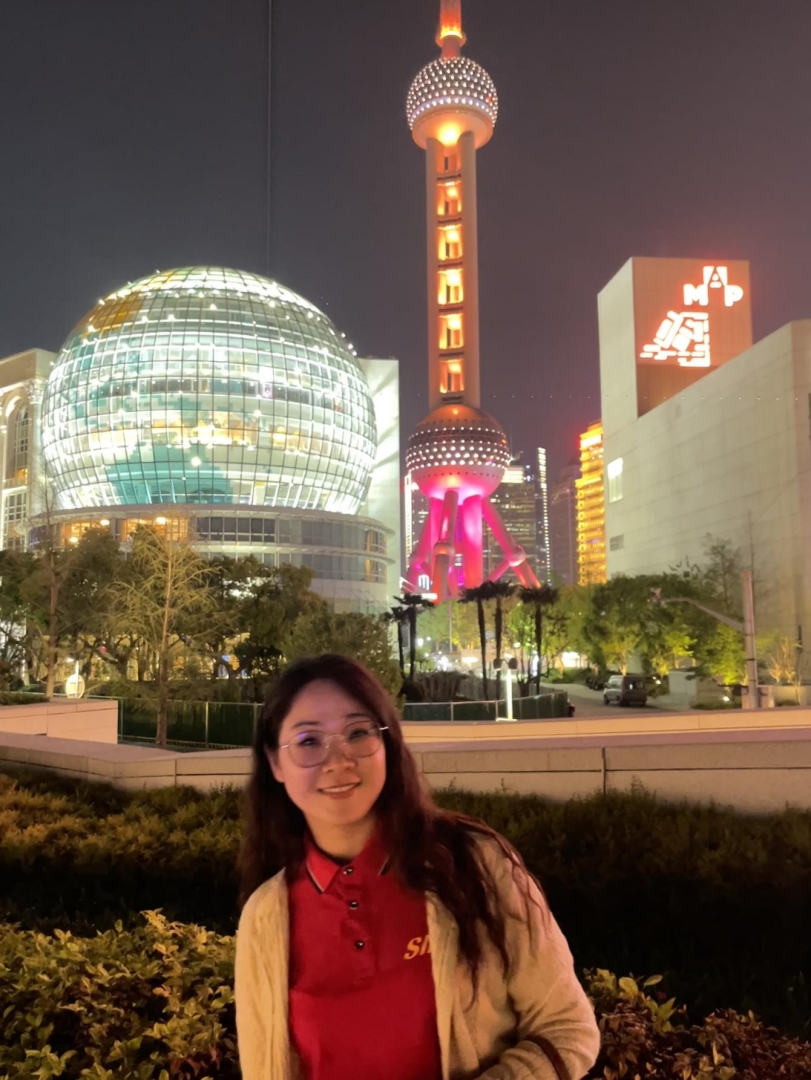
Xie Lin, Customer Service Specialist at Slkor
This trip to South Africa was meticulously planned over several months. Every step, from visa applications and hotel bookings to route planning and ticket arrangements, was filled with my anticipation for this land. Due to the frequent occurrences of armed robbery and kidnapping in South Africa, the high cost and non-guaranteed nature of visa applications with often vague rejection reasons, and the vast geographical distance of the southern hemisphere, Chinese tourists are a rare sight here. The mainstream tourists mostly come from Europe; Cape Town feels like a European town, while the old city center of Johannesburg is chaotic and uneasy.
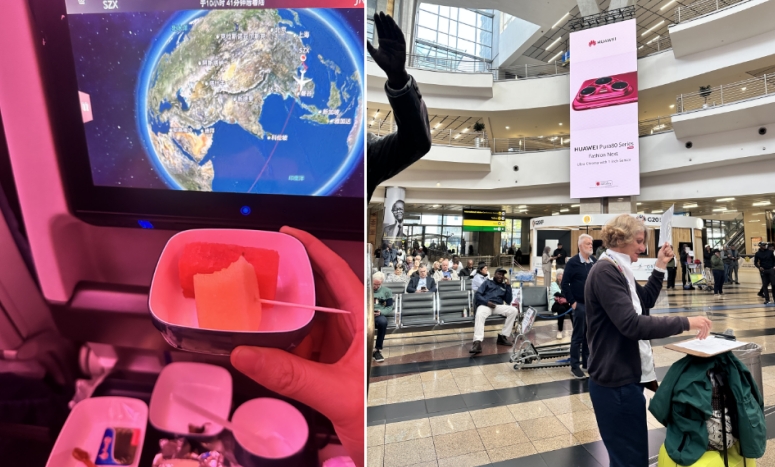
Johannesburg Airport
To ensure relative safety in South Africa, three things are essential: don’t flash wealth, don’t wear expensive jewelry, and don’t sport branded clothing. Always travel in groups, and try your best not to go out at night.
When booking hotels, besides choosing star-rated ones, pay close attention to high ratings and read reviews carefully. Watch out for any negative comments related to security, and if there are any, rule that hotel out directly. Plan your itinerary in detail beforehand, actively avoid high-crime neighborhoods, and prioritize staying in areas where tourists congregate.
Nowadays, card and mobile payments are very common in South Africa, with only occasional need for cash. As long as you choose the right areas, methods, and times, South Africa absolutely promises a mind-blowing and worthwhile journey!
Upon arriving in Johannesburg, the slow processing speed of the ETA system caused me to be stuck at customs for the entire morning (South African customs efficiency remains notoriously poor; after queuing for a long time, I was told upon reaching the counter that the officer was going off duty and I needed to re-queue at her colleague’s booth.
After re-queuing, that customs officer then left his post without permission to buy lunch. Returning, the ETA system was excruciatingly slow, resulting in a whole morning wasted just to get through). Forced to adjust my plans, I swapped the itinerary for Sun City and the Safari. Sun City is not a city but a luxurious resort built by South African billionaire Sol Kerzner in the mid-1970s, costing 830 million Rand. Its core attraction is “The Lost City,” an oasis of greenery spreading like waves across the desert, complete with man-made rainforests and wave pools. Known as the “Las Vegas of Africa,” it features famous spots like the Palace of the Lost City Hotel and the Bridge of Time.
The Palace Hotel is decorated thematically around African wildlife, while the Bridge of Time recreates the destruction of an ancient city through simulated earthquake sounds. Four star hotels, golf courses, and a casino are scattered throughout the resort. With diverse entertainment options like bush walks and water sports, it truly lives up to its reputation as a “paradise” in South Africa. The CASINO within the resort has even hosted the crowning of Miss World three times.
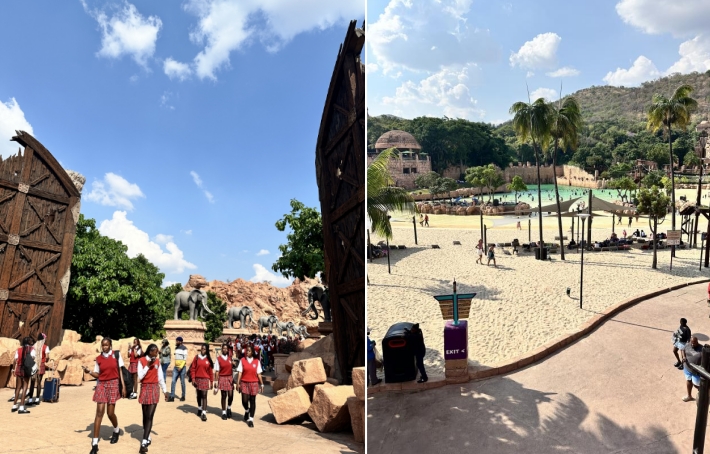
Sun City’s man-made beach
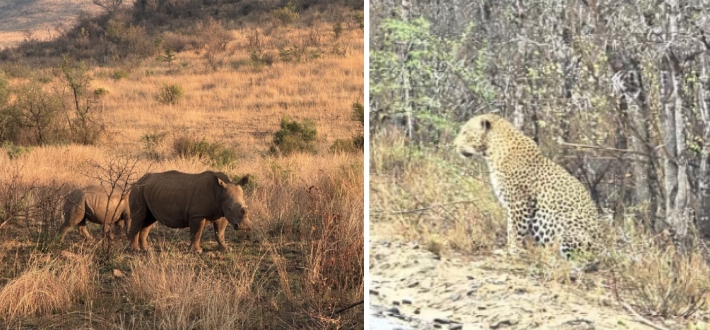
Although the Safari experience in South Africa might not quite match East Africa’s, it’s more than stunning as an introductory level. As South Africa’s largest wildlife park, Kruger National Park is an excellent place to seek out the “Big Five” – the African lion, African elephant, black rhinoceros, African leopard, and African buffalo.
Across the vast savannah and rolling hills, we not only spotted the Big Five but also encountered giraffes, baboons, zebras, and countless antelopes. The meaning of a Safari, however, goes far beyond just seeing animals; it’s about connecting with the natural cycles and life stories of this land.
Located less than an hour’s drive from Johannesburg, Lesedi Cultural Village is an indigenous village dedicated to promoting South Africa’s diverse ethnic cultures. It preserves the cultural traditions of tribes like the Zulu, Xhosa, and Pedi, recreating traditional homesteads and lifestyles. Visitors can sample traditional tribal cuisine, experience ancient living scenes, and enjoy the characteristic songs and dances of each tribe. The Zulu performance, in particular, held in a thatched circular arena, is powerful, with shocking music and dance showcasing the full charm of indigenous culture.
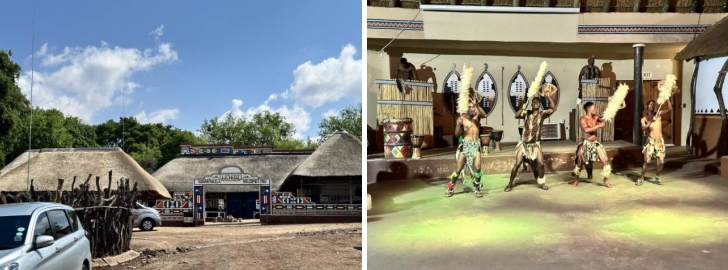
Lesedi Cultural Village
South Africa is a country with three capitals. The Union Buildings, seat of the government in the administrative capital Pretoria, are situated on a hill overlooking the entire city and serve as the offices for the South African President.
The gardens in front of the buildings are neat and beautiful, housing monuments and a statue of Nelson Mandela. From September to December each year, millions of jacaranda trees burst into bloom, blanketing the city in a sea of purple, a truly intoxicating sight.
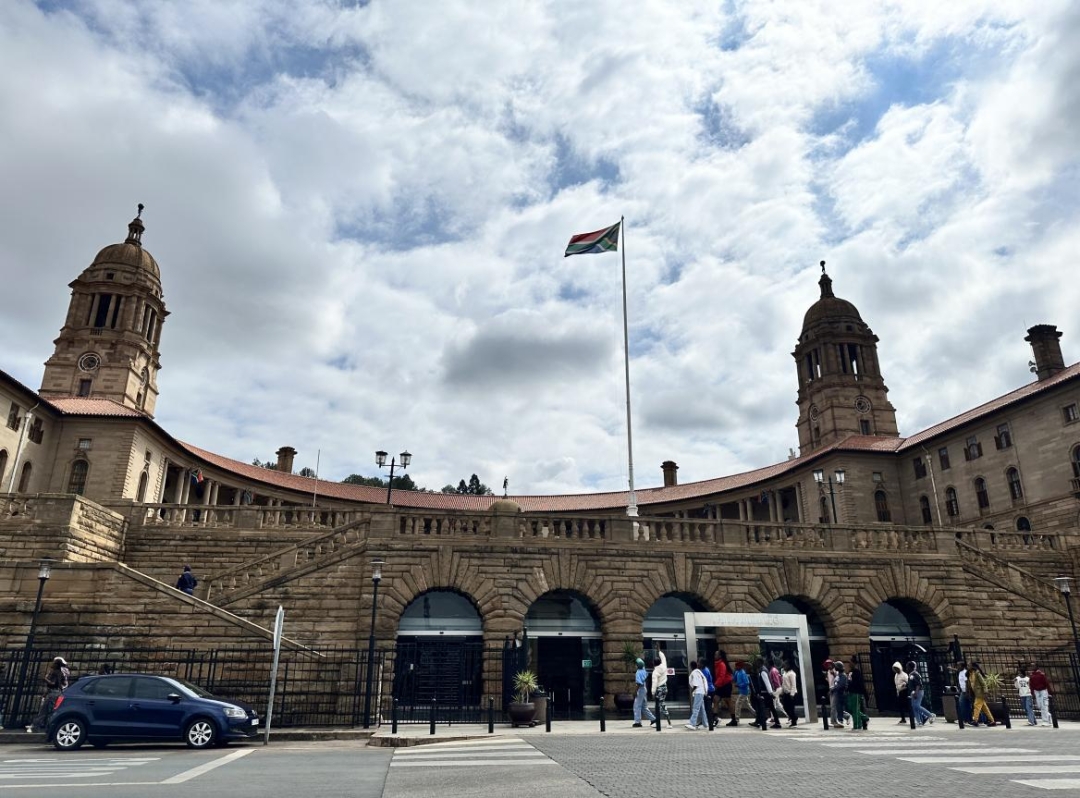
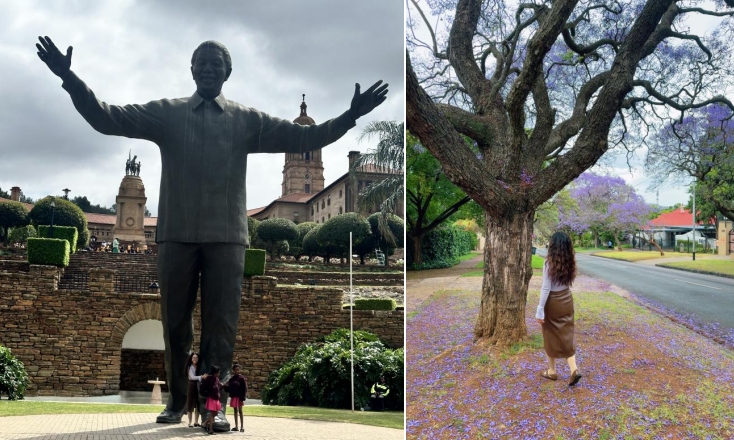
Union Buildings, Mandela Statue
As South Africa’s premier national park, Tsitsikamma National Park stretches 255 km along the Indian Ocean coastline, covering 1210 square kilometers, of which 605 square kilometers is indigenous forest. It’s the only region in Africa with coastal rainforest, encompassing diverse landscapes like primeval forest, lakes, and cliffs overlooking the sea. It’s a core part of the famous “Garden Route,” and its unique scenery and rich ecosystem make it a nationally protected area of prime importance. I deliberately set aside a whole day for hiking here, immersing myself completely in the beauty of nature.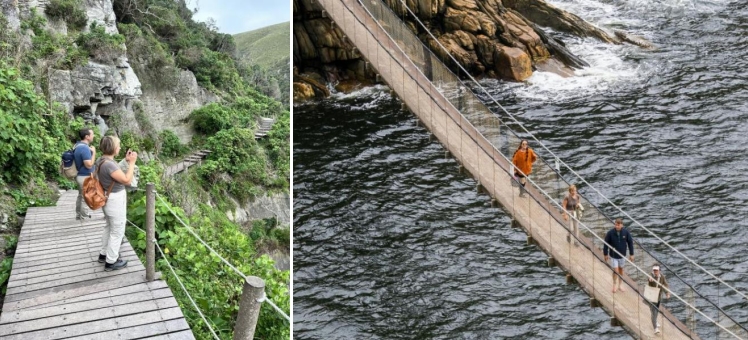
Tsitsikamma National Park
Departing from Tsitsikamma National Park, a short flight takes you to Mossel Bay. This is where the Portuguese navigator Dias landed in South Africa in 1488. Here you can see the “Post Office Tree,” which secretes a milky sap, and visit the Dias Maritime Museum. The museum is a replica of a 500-year-old ship, commemorating Dias’s feat of discovering the Cape of Good Hope and paving the way for the Portuguese sea route to India. The Shell Museum and Maritime Museum are also well worth a visit.
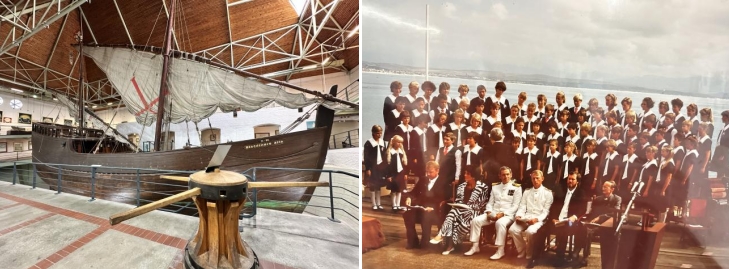
Dias Maritime Museum
The next day, we arrived in Hermanus. From July to November is the prime whale-watching season, as Southern Right Whales migrate here to calve. Hermanus, considered the best land-based whale-watching location in the world, attracts countless visitors. The following day, we took a boat out to Seal Island, where bare rocky outcrops are crowded with thousands of Cape fur seals, a bustling spectacle. Afterwards, we headed to Boulders Beach in Simon’s Town, home to a colony of African penguins – the only place in Africa where you can observe wild penguins up close. The penguins waddle around in pairs or groups, looking comical and adorable.
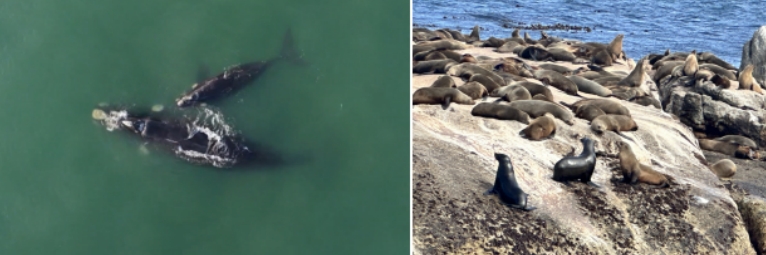
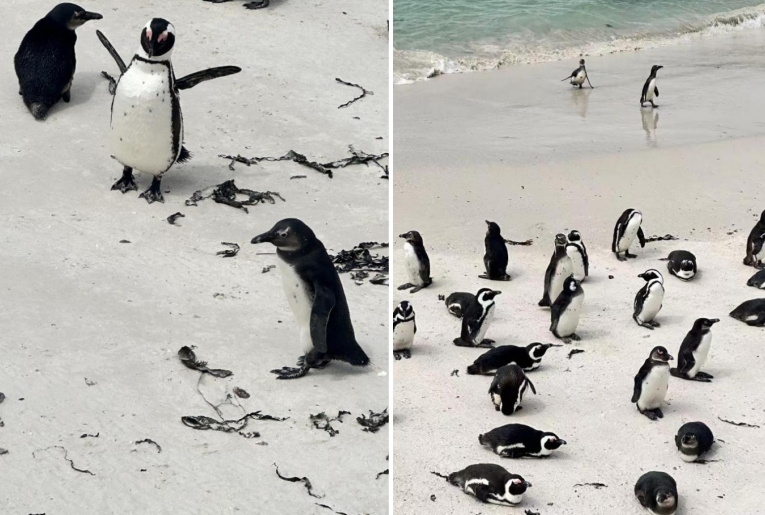
The final stop on the itinerary was the Cape of Good Hope Nature Reserve. This “Cape of Storms” overlooks the turbulent waves where the Indian and Atlantic Oceans meet. It’s a botanical treasure trove, home to some of the world’s oldest and most pristine fynbos and indigenous plant life.
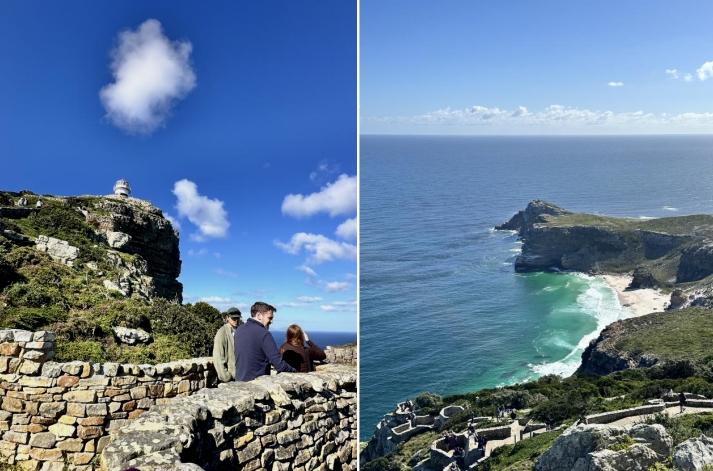
Cape of Good Hope Scenery
Although this South Africa trip was originally intended for whale watching and seeing penguins, my absolute favorite place turned out to be Cape Town. Driving slowly along the mountain roads, you can simultaneously gaze upon the magnificent meeting of the Atlantic and Indian Oceans. Surrounded by the sea on three sides, Cape Town offers stunning views like Camps Bay beach facing the Twelve Apostles mountain range.
The areas nestled against the green mountains and overlooking the blue sea are the city’s most affluent neighborhoods, with lush hillsides and beautifully scattered villas below. As the first European colonial stronghold in southern Africa, Cape Town served as a base for Dutch and British expansion into the African interior. It’s also home to the largest dry dock in the southern hemisphere and South Africa’s second-largest container port, Table Bay. Its finance, commerce, service, and logistics sectors are highly developed, featuring business districts like the Central Business District and Century City, and over 50 countries maintain consular missions here.
Beyond unique experiences like Boulders Beach, Seal Island, and whale watching, the city also boasts the Kirstenbosch National Botanical Garden, established in 1913 and spanning 528 hectares. The garden is incredibly diverse, with nearly 9000 species of flowering plants alone, complemented by theme gardens. Set against the backdrop of mountains, sea, sky, and lush greenery, it showcases an expansive beauty, perfect for leisurely strolls, especially for plant enthusiasts.
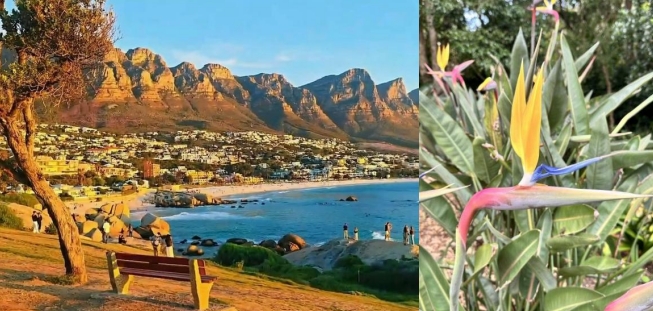
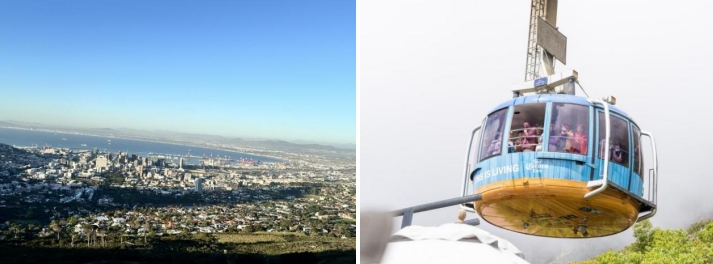
Table Mountain is the iconic landmark of Cape Town. While entry is free, hiking up is quite challenging, so it’s usually more convenient to purchase a round-trip cable car ticket. Booking online as an adult is cheaper than buying on site, where queues can take at least 3 hours. Consider buying a 700 Rand one-way fast-track ticket to save time
Road conditions in South Africa are excellent, and local drivers have a strong sense of right-of-way, making it ideal for self-drive tours. The scenery along the way, encompassing rugged cliffs, expansive oceans, serene lakes, and dense bush, is a feast for the eyes. As a former developed nation in Africa, South Africa boasts well-established infrastructure thanks to its European colonial history. Consequently, it offers a wealth of luxury experiences, blending raw nature with European-style civilization.
Here, you can find fine wine and cuisine, but also vast, untouched landscapes and abundant marine and terrestrial life. It allows one to contemplate a complex and profound human history during their vacation – from the starting point of colonization to the smoke of the Boer War, from the scars of apartheid to cities forged from gold. Online rumors and others’ descriptions cannot compare to the authenticity of personal experience. Only by setting foot on this land yourself can you truly understand South Africa’s unique charm, woven between its wild origins and its civilized veneer.
About Slkor:
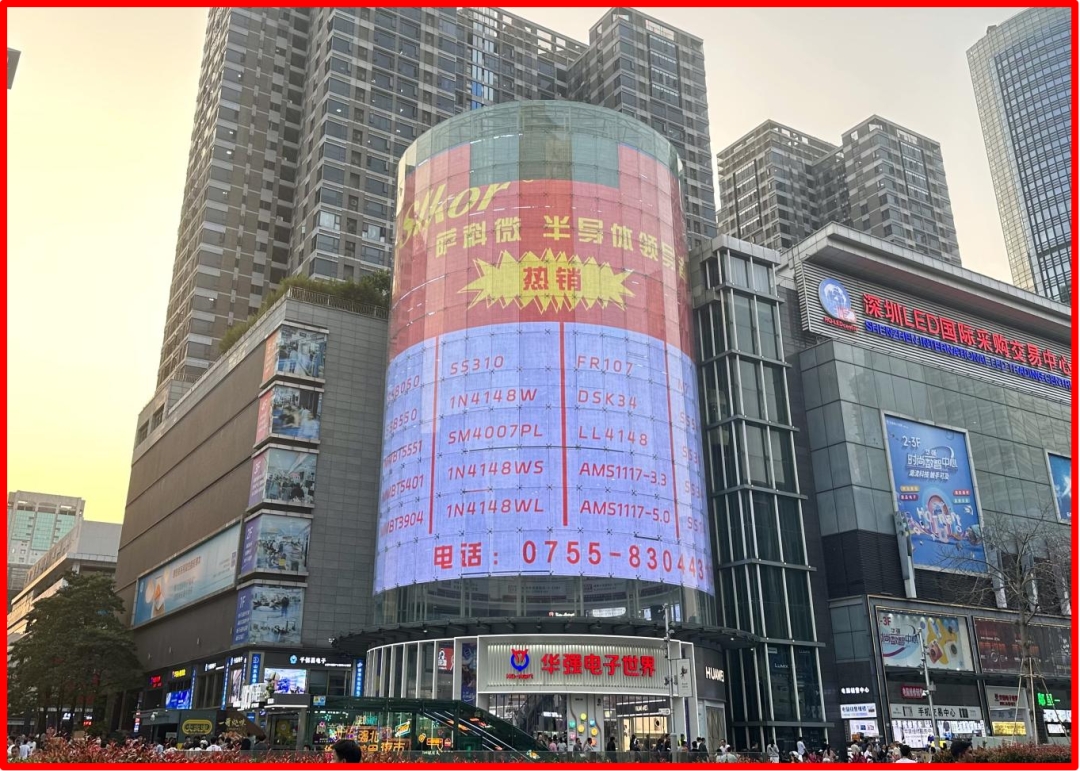
Shenzhen Slkor Semiconductor Co., Ltd. is a national high-tech enterprise embracing inclusivity, openness, and an innovative spirit. The company possesses strong technical expertise, with a core team comprising professionals from Yonsei University in South Korea and Tsinghua University. We hold internationally leading production processes for Silicon Carbide MOSFETs in the power semiconductor field and possess core technology for fifth-generation ultra-fast recovery power diodes.
Leveraging its powerful R&D capabilities, Slkor has launched over 2000 products covering power devices, power management ICs, and more, widely applied across numerous industries. The company not only focuses on technological breakthroughs but is also committed to fostering a warm and vibrant corporate culture. By organizing events like the “Hometown Food Festival” to share regional flavors, hosting “Spring Festival Essay Contests” to encourage employees to share their stories and insights, and conducting regular team-building activities, we create a work atmosphere for our employees that balances a sense of belonging with creativity. Here, technological innovation goes hand in hand with humanistic care, jointly driving the continuous growth of both the company and its employees.
Media Contact
Company Name: Shenzhen SLKOR Micro Semicon Co., Ltd.
Contact Person: Support
Email: Send Email
Phone: +86 18073002950
Address:18th Floor, Building T2, Lijincheng Center, Yousong Community, Longhua Street, Longhua District
City: Shenzhen
Country: China
Website: www.slkoric.com
Press Release Distributed by ABNewswire.com
To view the original version on ABNewswire visit: A Date with South Africa: Encountering the Essence of Life Between Wilderness and Civilization – Slkor Xie Lin