Wine Market Research Report Information by Wine Type, Flavor Profile, Packaging Type, Alcohol Content, and Region Forecast to 2035
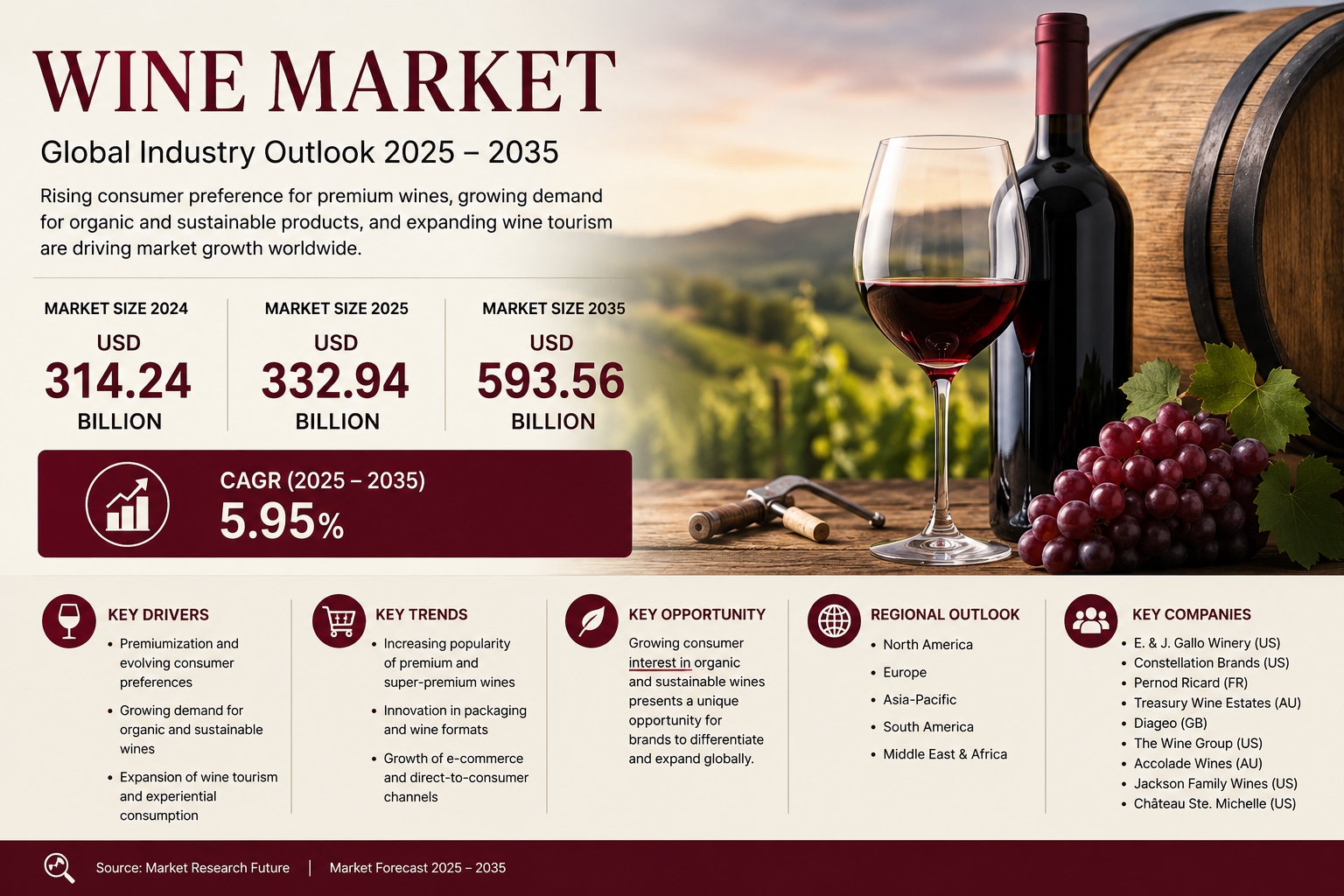
NEW YORK, NY, UNITED STATES, June 18, 2026 /EINPresswire.com/ — The global Wine Market continues to evolve as changing consumer lifestyles, premium beverage preferences, sustainability initiatives, and product innovation reshape the competitive landscape. According to the latest industry assessment published by Market Research Future, the Wine Market was valued at USD 314.24 billion in 2024 and is projected to reach USD 332.94 billion in 2025. The market is expected to achieve USD 593.56 billion by 2035, expanding at a compound annual growth rate (CAGR) of 5.95% during the forecast period from 2025 to 2035.
The industry is benefiting from growing consumer interest in premium wine experiences, increasing demand for organic and sustainable products, expanding wine tourism activities, and continuous innovation across production, packaging, and distribution channels. These factors are creating opportunities for wine producers, distributors, and retailers across both established and emerging markets.
Premiumization Continues to Shape Consumer Purchasing Behavior
One of the most influential trends within the global wine industry is the growing preference for premium and super-premium wine products. Consumers are increasingly seeking higher-quality beverages that offer distinctive taste profiles, authenticity, and unique production characteristics.
Rather than focusing solely on volume consumption, many consumers are demonstrating greater interest in curated experiences and premium offerings. This shift has encouraged wineries to emphasize craftsmanship, heritage, vineyard sourcing, and limited-production releases.
Premium wines often command higher price points due to factors such as regional identity, grape variety quality, aging processes, and production techniques. As disposable incomes rise in many parts of the world, consumers are becoming more willing to invest in premium beverage experiences.
The premiumization trend is expected to remain a major contributor to market expansion throughout the forecast period.
Get Full PDF Sample Copy of Report: (Including Full TOC, List of Tables & Figures, Chart) @ https://www.marketresearchfuture.com/sample_request/1655
Growing Interest in Organic and Sustainable Wines Creates New Opportunities
Sustainability has emerged as a significant focus area within the Wine Market. Consumers are increasingly evaluating products based on environmental impact, production transparency, and responsible agricultural practices.
Organic wines have gained considerable popularity as consumers seek products made with reduced chemical inputs and environmentally conscious farming methods. Wineries worldwide are responding by implementing sustainable vineyard management practices and pursuing organic certifications.
In addition to organic production, consumers are showing interest in biodynamic wines, regenerative agriculture initiatives, and environmentally responsible packaging solutions. Lightweight bottles, recyclable materials, and carbon reduction programs are becoming important elements of sustainability strategies.
The increasing demand for organic and sustainable wines presents substantial opportunities for producers seeking to differentiate their brands and align with evolving consumer values.
Changing Consumer Preferences Drive Product Innovation
Consumer tastes within the wine industry continue to diversify, encouraging producers to expand product portfolios and explore new market opportunities. Traditional wine categories remain important; however, demand for innovative products continues to grow.
Manufacturers are introducing new flavor profiles, lower-alcohol options, premium blends, sparkling varieties, and region-specific offerings designed to appeal to changing consumer preferences. Younger consumers, in particular, are demonstrating interest in experimentation and discovering unique wine experiences.
The industry is also witnessing growing demand for wines that emphasize authenticity, provenance, and storytelling. Consumers increasingly want to understand the origins of products, production techniques, and the heritage behind individual brands.
As competition intensifies, product innovation is expected to remain a critical factor supporting market differentiation and long-term growth.
Wine Tourism Enhances Brand Visibility and Consumer Engagement
Wine tourism has become an increasingly important contributor to the global wine industry. Vineyards and wineries are developing immersive visitor experiences that combine wine tasting, hospitality, education, and regional tourism.
Consumers are seeking experiential travel opportunities that provide direct engagement with producers and offer deeper insights into wine-making traditions. Winery tours, vineyard visits, tasting events, culinary pairings, and regional wine festivals have become valuable marketing and brand-building tools.
Wine tourism not only generates additional revenue streams but also strengthens consumer loyalty and brand recognition. Regions known for wine production continue to benefit from increased tourism activity and international exposure.
As experiential consumption trends continue to gain momentum, wine tourism is expected to remain a key driver of industry development.
E-Commerce and Digital Channels Transform Wine Distribution
The expansion of digital commerce has significantly changed how consumers discover, evaluate, and purchase wine products. Online platforms have become increasingly important distribution channels, offering convenience, product variety, and access to detailed information.
Consumers can now explore wines from different regions, compare tasting notes, review recommendations, and purchase products directly through digital channels. This accessibility has expanded market reach and enabled producers to engage with consumers more effectively.
Subscription services, personalized recommendations, virtual tasting experiences, and direct-to-consumer business models have further strengthened digital engagement within the industry.
Wine producers and retailers are increasingly investing in digital marketing, customer relationship management, and e-commerce infrastructure to remain competitive in an evolving marketplace.
Packaging Innovation Influences Market Dynamics
Packaging continues to play an important role in shaping consumer perceptions and purchasing decisions. While traditional glass bottles remain dominant, alternative packaging formats are gaining attention.
Manufacturers are introducing innovative packaging solutions designed to improve convenience, sustainability, and portability. Formats such as boxed wine, cans, lightweight bottles, and recyclable materials are becoming increasingly popular among specific consumer segments.
Younger consumers often demonstrate greater openness to non-traditional packaging formats, particularly when they offer convenience and environmental benefits. These innovations are enabling producers to reach new audiences and expand consumption occasions.
Packaging development is expected to remain an important area of investment as companies seek to enhance product appeal and address sustainability objectives.
Regional Outlook
North America
North America remains a major market for wine consumption and premium wine products. Consumers in the region increasingly seek high-quality experiences, organic offerings, and sustainable products.
The continued growth of digital retail channels and wine tourism activities supports market expansion across the region.
Europe
Europe represents one of the world’s most established wine markets and production centers. The region benefits from strong wine-making traditions, diverse product offerings, and globally recognized wine-producing countries.
Consumer interest in premium wines, sustainability initiatives, and regional authenticity continues to influence market development throughout Europe.
Asia-Pacific
Asia-Pacific is emerging as an increasingly important market due to rising disposable incomes, urbanization, and growing consumer awareness of wine culture. Younger consumers are particularly contributing to category expansion as wine becomes more integrated into social and dining experiences.
The region presents significant opportunities for both international and domestic producers.
South America
South America continues to play an important role in global wine production and exports. Several countries have established strong reputations for quality wine production, supporting regional market development and international competitiveness.
Middle East and Africa
The Middle East and Africa region is gradually witnessing increasing interest in premium beverage categories, supported by tourism growth, hospitality expansion, and changing consumer preferences in select markets.
Competitive Landscape
The global Wine Market remains highly competitive, with established producers focusing on innovation, sustainability, premiumization, and international expansion strategies.
Key companies operating within the market include:
• E. & J. Gallo Winery (US)
• Constellation Brands (US)
• Pernod Ricard (FR)
• Treasury Wine Estates (AU)
• Diageo (GB)
• The Wine Group (US)
• Accolade Wines (AU)
• Jackson Family Wines (US)
• Château Ste. Michelle (US)
These industry participants continue to invest in vineyard development, sustainable production practices, premium product portfolios, digital marketing initiatives, and consumer engagement programs.
Strategic partnerships, acquisitions, brand diversification, and geographic expansion remain important approaches for strengthening market positions.
Sustainability Becomes a Competitive Differentiator
Environmental responsibility is increasingly influencing purchasing decisions within the wine industry. Consumers are paying closer attention to sustainability claims, ethical sourcing practices, and production transparency.
Wine producers are responding by adopting renewable energy solutions, improving water management practices, reducing packaging waste, and investing in environmentally responsible vineyard operations.
Companies that successfully integrate sustainability into their business strategies may be better positioned to strengthen customer loyalty and brand value in the coming years.
As regulatory frameworks and consumer expectations continue to evolve, sustainability is expected to remain a critical component of long-term industry competitiveness.
Future Outlook
The global Wine Market is positioned for substantial growth through 2035, supported by premiumization trends, rising consumer interest in organic and sustainable wines, expanding digital distribution channels, and continued product innovation.
The growing appeal of experiential consumption, including wine tourism and curated tasting experiences, is expected to further enhance market opportunities. Additionally, increasing adoption of environmentally responsible production methods and packaging solutions will likely influence future competitive strategies.
As consumers continue to seek authenticity, quality, sustainability, and distinctive wine experiences, producers that effectively balance tradition with innovation are expected to benefit from evolving market dynamics. With strong opportunities across developed and emerging regions, the Wine Market is anticipated to remain one of the most dynamic segments within the global beverage industry over the next decade.
Discover Related Research Reports By Market Research Future:
Sparkling Wine Market https://www.marketresearchfuture.com/reports/sparkling-wine-market-6546
Luxury Wines Spirits Market https://www.marketresearchfuture.com/reports/luxury-wines-spirits-market-7236
Red Wine Market https://www.marketresearchfuture.com/reports/red-wine-market-2951
Sagar Kadam
Market Research Future
+1 628-258-0071
email us here
Visit us on social media:
LinkedIn
Facebook
X
Legal Disclaimer:
EIN Presswire provides this news content “as is” without warranty of any kind. We do not accept any responsibility or liability
for the accuracy, content, images, videos, licenses, completeness, legality, or reliability of the information contained in this
article. If you have any complaints or copyright issues related to this article, kindly contact the author above.

Media gallery