
Alumobility and Stellantis study shows system-level potential of aluminium-intensive vehicle design
PR Newswire
ZURICH, Oct. 22, 2026
Case study based on the STLA Medium platform achieves 41% lower body-in-white mass and identifies potential for a 15% smaller battery
- 20% lower total vehicle mass through system-level optimisation
- 15% battery right-sizing potential while maintaining equivalent range
- 41% lower body-in-white mass, unlocking further savings across the vehicle
ZURICH, Oct. 22, 2026 /PRNewswire/ — A joint theoretical case study by Stellantis and Alumobility demonstrates how an aluminium-intensive vehicle (AIV) design can not only transform the mass of the body, closures of a battery-electric vehicle, but also save mass in the wider vehicle architecture.
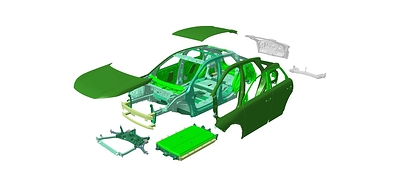
Presented today at EuroCarBody 2026 in Bad Nauheim, Germany, the study uses the Stellantis STLA Medium platform as its existing steel-based reference and explores the effects of applying aluminium-intensive design at vehicle-system level. Conducted over one year, the study asks what could be achieved if an already optimized multi-energy platform were replaced by an AIV architecture. Its objective was to pursue best-in-class vehicle weight, lower manufacturing complexity and a viable business case without compromising customer performance.
The resulting concept achieves a 41% reduction in mass, from 652 kg to 405 kg. When the primary weight reduction and its effects on other vehicle systems are considered together, the study indicates a decrease in total vehicle mass of around 20%, from 2,103 kg to 1,682 kg (421kg saving).
This lower mass creates the potential to reduce the required battery capacity by 15% compared with the STLA Medium EV reference configuration, while maintaining equivalent vehicle range under the study assumptions.
“The study shows that the greatest value of lightweighting is not limited to the mass removed from the body structure. It lies in what that lower mass enables engineers to optimise across the complete vehicle, from the battery and electric drive to the chassis and suspension,” said Christophe Patois, SVP Global Head of Body, Safety & Quality at Stellantis
From lightweight body to optimised vehicle system
Rather than approaching aluminium as a one-for-one material substitution, the study applies a “less is more” design strategy based on part integration, utilising sheet, castings, extrusions and optimised joining.
The aluminium-intensive concept reduces the body-in-white part count by 27% while also lowering the number of joints and simplifying the range of material gauges and grades required. The battery enclosure alone was reduced from 53 parts to 29, together with substantial reductions in joints and fixings.
Structural efficiency also improved. The concept’s Lightweight Index decreased from 2.2 to 1.4, representing an improvement of 36% compared with the reference body.
These changes illustrate the study’s central finding: lowering body primary mass can trigger secondary mass optimisation opportunities. In addition to battery right-sizing, the study identifies potential changes to the electric drive motor, chassis systems like brakes and suspension. In this way, the work goes beyond material substitution and represents a complete vehicle-system rethink.
“Aluminium creates the greatest value when it is considered early in the vehicle architecture. This approach allows engineering teams to capture benefits across the entire system, rather than evaluating the body structure in isolation,” said Mark White, Technical Director, Alumobility.
Performance without structural compromise
The study evaluated critical aluminium components and manufacturing processes across the body-in-white, closures, chassis sub-frames and battery enclosure. Its technical assessment covered cold and hot forming aluminium sheets, extrusions and castings, with feasibility of established state of the art joining technologies.
The study crash targets were fulfilled or exceeded, while torsional stiffness, fatigue, noise, vibration and harshness, and overall structural performance remained competitive or improved. The study also concluded that the evaluated aluminium components could be produced through technically feasible manufacturing pathways, with limited geometry adaptations required in the agreed assessed part feasibility cases.
Implications beyond vehicle mass
Battery right-sizing has implications for both overall vehicle cost and overall vehicle carbon performance. Under the study assumptions, reducing the battery capacity by 15% could produce a similar reduction in battery-related cost and a reduction in the battery production carbon footprint compared with the reference configuration.
Lower vehicle mass can also reduce energy demand during operation. Alternatively, the saved mass could be reinvested in greater range or customer features. Under the study assumptions, vehicle energy consumption decreased from 140 Wh/km to 122 Wh/km while maintaining a comparable range.
The findings suggest that aluminium-intensive architecture should not be viewed solely as a solution for premium vehicles. By combining lower mass with battery right-sizing and structural simplification, it could also support the technical and economic requirements of mainstream battery-electric vehicles. For combustion-engine and plug-in hybrid vehicles, lower vehicle mass may also reduce CO2-related penalties and weight-based taxation, depending on the applicable market and regulatory framework.
About the study
The joint study by Alumobility and Stellantis evaluated the conversion and optimisation of an STLA Medium-based steel-intensive reference architecture into an aluminium-intensive vehicle concept. It took a full-system approach to assessed mass, structural performance, manufacturing feasibility, complexity, battery right-sizing potential, vehicle-system value and carbon performance. The study is theoretical and its results reflect the specific design parameters and assumptions applied. Any cost or pricing information used is based on generic, aggregated third-party study data or otherwise published information.
About Alumobility
Alumobility is a global ecosystem of leading aluminium producers and downstream technology partners that supports automotive manufacturers in creating lighter, safer, smarter and more sustainable vehicles. The non-profit association was founded to focus on theoretical technical studies to advance the adoption of aluminium automotive body sheet (ABS). Alumobility is helping to fulfil the promise of a lighter, more efficient, more sustainable mobility future.
For more information visit alumobility.com

 View original content to download multimedia:https://www.prnewswire.com/news-releases/alumobility-and-stellantis-study-shows-system-level-potential-of-aluminium-intensive-vehicle-design-302916884.html
SOURCE Alumobility


