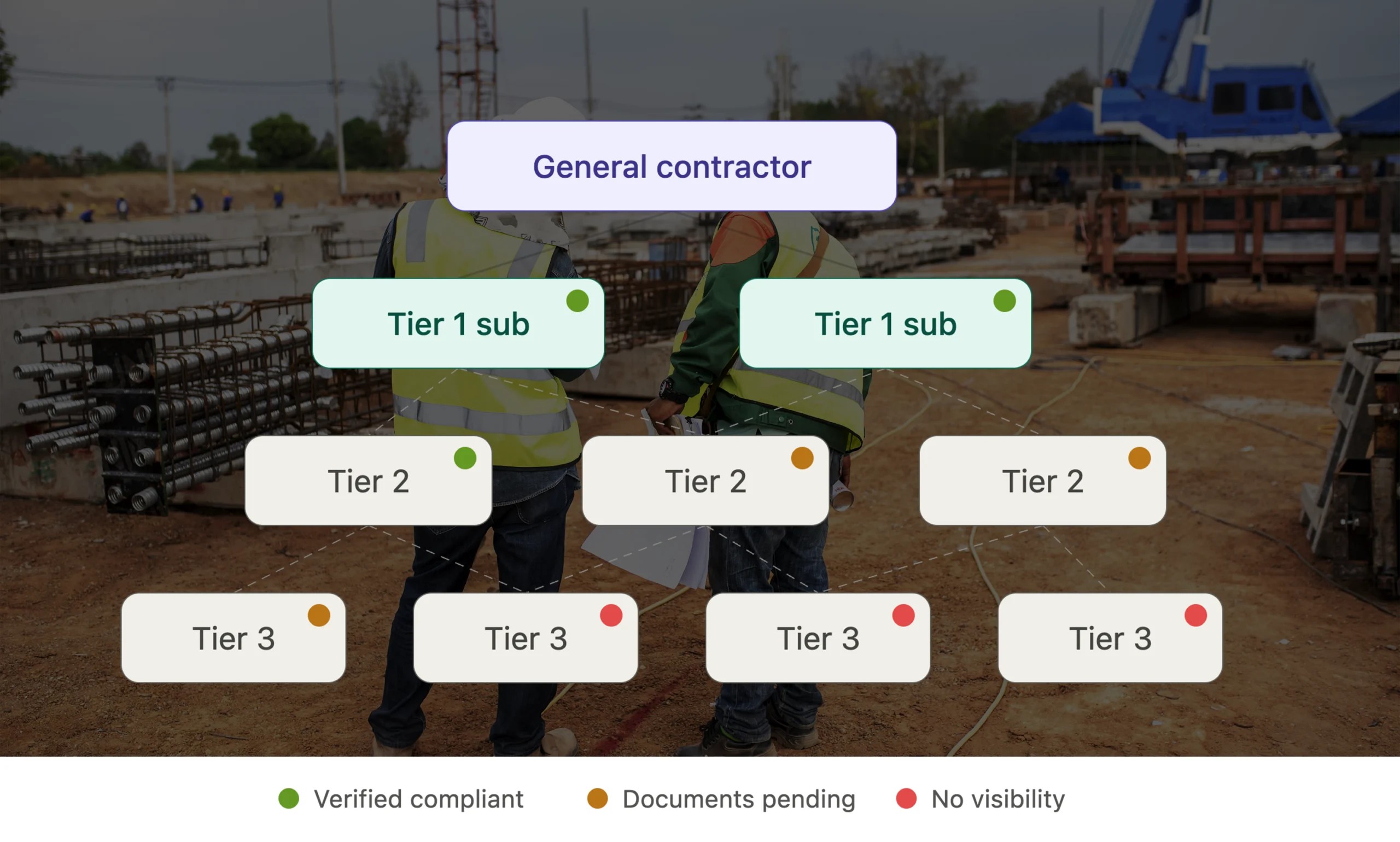
CanQualify calls on industry leaders to standardize subcontractor prequalification oversight. Unvetted subcontractors create major risk and liability gaps.
TORRANCE, CA, UNITED STATES, November 5, 2026 /EINPresswire.com/ — CanQualify, a service-backed contractor and supplier prequalification platform, is encouraging safety, procurement, and operations leaders to examine whether their contractor qualification programs adequately account for subcontractors performing work at their facilities and projects.
At the 2026 ASSP and NSC safety conferences, CanQualify emphasized that contractor qualification requirements should follow the work through subcontracting arrangements. Approving a prime contractor does not establish whether the subcontractors it engages meet the hiring client’s applicable requirements.
Extended conversations with safety professionals reinforced the relevance of that message. Some described frustration with programs that evaluate direct contractors but do not require comparable qualification of subcontractors performing the work. Their experiences highlighted a gap between recognizing the importance of subcontractor prequalification and consistently applying it.
CanQualify is encouraging hiring clients to examine where their qualification requirements stop. When subcontractors perform work covered by a client’s standards, their contractual relationship should not place them outside the qualification process. Requirements should reflect the work and its risks, with clear responsibility for review and visibility into qualification status.
The Risks of Subcontractor Blind Spots
A qualified general contractor can engage a subcontractor whose safety performance, insurance documentation, or workforce qualifications do not meet the hiring client’s applicable requirements. Without an established review process, those gaps may remain unresolved until mobilization, an audit, or an incident brings them to light.
Potential consequences include:
• Additional administrative work: Missing or incomplete records can leave safety and procurement teams pursuing documentation after work has already begun.
• Project delays and added costs: Discovering qualification gaps during mobilization can require additional review, corrective action, or a change in contractor selection.
• Reduced risk visibility: Hiring clients may lack the information needed to evaluate the companies and workers performing specific tasks.
• Potential claims and regulatory exposure: Unresolved deficiencies can complicate incident investigations and raise questions about contractor oversight.
• Prequalification helps identify gaps and inform qualification decisions. It remains one part of a broader contractor safety program that includes communication, field oversight, and ongoing monitoring.
Applying Requirements Beyond the Prime Contract
A CanQualify case study illustrates why subcontractor qualification requirements matter. A contractor that did not meet a hiring client’s established safety benchmarks was subsequently proposed for work as a subcontractor under a qualified general contractor.
Because the client’s requirements also applied to subcontractors, the contractor’s ineligible status remained relevant. The general contractor reviewed the documented status through CanQualify, escalated the issue to the hiring client, and the proposed subcontracting arrangement did not proceed.
The lesson is straightforward: changing a contractor’s contractual role does not resolve the qualification deficiencies that made it ineligible.
Consistent oversight does not mean requiring identical documentation from every company. Qualification requirements should reflect the scope of work, associated hazards, and hiring client’s standards. Organizations should also establish who reviews subcontractors, how qualification status is communicated, and who resolves deficiencies or approves exceptions.
A Practical Path Forward
CanQualify encourages organizations to review how subcontractors enter their qualification programs, including whether additional subcontracting arrangements are identified and evaluated when applicable.
A structured process can help organizations:
• Apply scope-relevant requirements consistently to contractors and subcontractors.
• Give hiring clients and general contractors visibility into qualification status.
• Reduce repeated document requests and last-minute qualification issues.
• Maintain records supporting approval decisions, corrective actions, and ongoing monitoring.
CanQualify supports this work through centralized documentation, safety data validation, insurance monitoring, and workforce credential tracking, according to the services included in each client’s program. Its service team helps contractors understand and complete requirements, while hiring clients retain responsibility for qualification criteria, exceptions, and site authorization.
About CanQualify
CanQualify is a service-backed contractor and supplier prequalification platform that helps organizations collect and validate qualification information against client-specific requirements. Its solutions support document collection, safety data validation, insurance monitoring, workforce credential management, and safety program audits. By combining software with hands-on support, CanQualify helps hiring clients improve risk visibility and reduce administrative work while helping contractors navigate the qualification process.
For more information, visit canqualify.com.
Jackqueline Lou
CanQualify
+1 877-600-3233 ext. 227
Visit us on social media:
LinkedIn
Facebook
YouTube
TikTok
X
Legal Disclaimer:
EIN Presswire provides this news content “as is” without warranty of any kind. We do not accept any responsibility or liability
for the accuracy, content, images, videos, licenses, completeness, legality, or reliability of the information contained in this
article. If you have any complaints or copyright issues related to this article, kindly contact the author above.

Media gallery