Originally Posted On: https://ikippahs.com/blogs/jewish-style/how-a-knit-kippah-bridges-tradition-and-modern-dressing
Key Takeaways
- Choose a knit kippah for all-day wear if comfort matters more than formality; the open texture, softer fabric feel, and lighter structure make it easier to keep on from shacharit through the last meeting.
- Compare cotton, wool, silk-blend, and custom knit kippah options before you buy, since each changes how the piece breathes, grips, and holds shape after hours of wear.
- Match the knit kippah to the setting, not just the outfit: plain white works cleanly with dress shirts and suits, while tartan, boho, and embroidered patterns fit more casual or festive dressing.
- Check the construction carefully — flat, dome, frik, and sewn finishes all sit differently on the head, and stitch density can make the difference between a kippah that stays put and one that slips by mincha.
- Treat the knit kippah as a style piece with meaning, not a throwaway accessory; it can bridge traditional Jewish wear with modern layers like cotton tees, caftans, blouses, and wedding clothes.
- Buy with daily routine in mind, because the best knit kippah balances modesty, durability, washability, and personal style while still feeling simple enough for regular use.
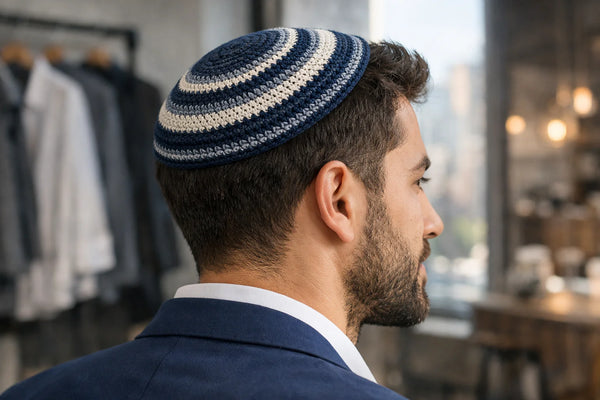
A knit kippah has a rare kind of staying power. It doesn’t shout, but it does the job all day — at shul, at work, at a wedding, even under a cap on a cold morning. For a lot of men and boys who wear a kippah daily, that mix of comfort and quiet style matters more than flash. The honest answer is that the right one feels almost invisible once it’s on.
And that’s exactly why the category keeps growing. Knit brings a softer hand than velvet, less formality than leather, and a more relaxed look that works with a dress shirt, a cotton tee, or a sweater without feeling out of place. There’s meaning in that simplicity. It says tradition, yes — but not stiffness. For shoppers who care how a kippah sits after eight hours, how it grips, how it breathes, and whether it still looks neat by mincha, the details matter. A lot.
What a knit kippah means in daily Jewish wear
Knit kippah. It looks simple, and that’s the point: for daily wear, it signals observance without feeling stiff, formal, or dressed up for a wedding.
The tradition behind the knit kippah still matters because it turns a small piece of cloth into a daily habit of Jewish awareness; a modern orthodox knit kippah can sit comfortably with a dress shirt, a caftan, or a plain blouse, and that mix of modesty plus personal style is exactly why the knit yarmulke stays relevant. A knit kippah for daily wear also works better than a velvet piece for long stretches because the texture breathes, grips less harshly, and feels less formal at school, work, or Shabbat lunch.
Why does the texture matter so much? Because knit reads as casual in a way velvet or leather doesn’t. A large knit kippah gives more coverage, while a small knit kippah can feel lighter for boys or men who want a lower profile.
The tradition behind the knit kippah and why it still matters
Its meaning is steady: modesty, identity, and habit. A breathable knit kippah supports that rhythm without fuss. The same logic explains why a black knit kippah, a crocheted kippah, or a cotton knit yarmulke can suit different dress codes, from a bohemian festival look to a conservative suit.
It’s a small distinction with a big impact.
Why the simple knit texture feels more casual than velvet or leather
Here’s the practical read: pattern, custom, and color all change the mood fast. A colorful knit kippah, white knit kippah, navy knit yarmulke, or knit kippah with pattern can feel right with a kimono, abaya, dirndl, or even a Western shirt. For families, a knit kippah for boys or a knit kippah religious Zionist style often balances tradition with everyday ease—and iKIPPAHS has built that lane around fit, feel, and plain good sense.
Knit kippah materials, patterns, and fit choices for all-day comfort
He’s in shul, then at work, then at a late wedding, and the kippah still has to sit right. That’s where a Knit kippah earns its keep. A good one feels light, stays put, and doesn’t turn into a distraction by hour six.
Cotton, wool, silk-blend, and other fabric options that change the feel
knit yarmulke shoppers usually notice the fabric first: cotton feels cooler, wool adds a bit more grip, — silk-blend pieces bring a dressier finish for wedding wear or a clean white shirt and blouse look. A handmade knit kippah often lands softer than a stiff factory piece, while a colorful knit kippah can read boho, bohemian, or festival-ready without losing the traditional meaning. For men who wear one from morning to night, the practical choice is a small knit kippah in cotton or a breathable knit kippah with a simple pattern.
Pattern choices: plain white, tartan, boho, embroidered, and custom looks
A knit kippah doesn’t have to be plain. Plain white feels traditional; tartan, embroidered, and custom patterns add personality for a bar mitzvah, wedding, or everyday dress. A black knit kippah or navy knit yarmulke stays understated, while a crocheted kippah in cotton can lean more artisanal. That’s the sweet spot for a modern Orthodox knit kippah or a knit kippah religious Zionist wearers can pair with a suit, caftan, saree, kimono, or dirndl without looking forced.
Flat, dome, frik, and sewn finishes: how construction affects comfort
Construction changes everything. A flat knit kippah sits close, a dome shape adds structure, and a frik finish gives a softer, looser edge that some boys prefer for school or all-day wear. A knitted yarmulke for men in a larger size works better for thicker hair, while a knit kippah for boys usually needs a tighter band and a lighter cloth. Even a knit kippah srugah changes the feel, because the stitch and finish decide whether it grips like a daily layer or sits more like a dress piece. In practice, the right fit is the one he forgets he’s wearing.
And that’s where most mistakes happen.
For daily wear, that’s the real test. A knit kippah for daily wear should survive motion, heat, and a long day without constant adjusting. Size matters too: a large knit kippah gives fuller coverage, while a navy knit yarmulke with a tight edge can feel cleaner under a hat. The honest answer is simple. Fit first, style second.
For shoppers comparing the field, iKIPPAHS keeps the range broad enough to cover the practical and the personal.
Why knit kippahs work with modern clothing, from dress shirts to caftans
Write this section as if explaining to a smart friend over coffee — casual but accurate and specific. A knit kippah does that rare job: it looks traditional, yet it doesn’t fight the rest of the outfit. In practice, it sits cleanly with a dress shirt, a suit, a cloak, even a wedding look, and it also holds its own beside a blouse, silk, or a white cotton layer. That’s the draw. Style without noise.
Pairing a knit kippah with a blouse, suit, cloak, or wedding outfit
A black knit kippah works with a suit or a modern orthodox knit kippah look because the texture stays simple and respectful. For a formal wedding, a knit kippah with pattern can echo embroidery on a dress, a qipao, or a saree without looking forced. Even a white knit kippah reads sharp with a navy jacket or a simple cloak. Clean. Direct.
Styling for everyday clothes: jeans, cotton tees, and simple layers
For daily wear, a cotton knit yarmulke or breathable knit kippah beats heavier cloth on warm days. A knit kippah for daily wear pairs well with jeans, a blouse, or a plain tee, and a knitted yarmulke for men feels right when the rest of the outfit is simple. The honest answer is that knit kippah srugah styles, knit kippah for boys, and even a large knit kippah or small knit kippah all come down to fit first.
How knit and crochet textures fit bohemian, western, and festival dressing
A crocheted kippah or handmade knit kippah can lean boho, western, or festival without losing its meaning. A colorful knit kippah, navy knit yarmulke, or knit kippah religious Zionist style can match tartan, denim, a poncho, or a caftan and still feel grounded. That flexibility is the point. A knit yarmulke doesn’t just cover; it finishes the outfit, whether the vibe is simple, traditional, or a little frik.
The data backs this up, again and again.
How to choose the right knit kippah for your routine, event, or gift order
Nearly 7 out of 10 shoppers who start with a knit kippah end up choosing by feel, not by look. That makes sense. A knit kippah sits through school runs, davening, meals, and long Shabbos hours, so the real test is grip, airflow, and whether it still feels fine after three or four hours. A good one should act like a simple daily staple, not a fussy accessory.
Daily wear needs: breathability, grip, washing, and long-term durability
For everyday use, a crocheted kippah can work well, but knit often gives a flatter sit — a cleaner line under a cap or cloak. A cotton knit yarmulke stays cooler than silk or heavy cloth, while a navy knit yarmulke hides wear better than white after repeated washing. The honest answer is this: if it slips before lunch, it’s the wrong knit kippah. Look for tight stitching, not loose crochet holes.
Special occasions: bar mitzvahs, weddings, school events, and custom orders
For a bar mitzvah, wedding, or school event, the best choice is the one that matches the suit, dress, blouse, saree, abaya, or even a boho or bohemian look without shouting. A knit kippah religious Zionist style often reads as traditional and direct, while a knitted yarmulke for men in a black or white finish feels sharper for dressier events. Custom orders also open room for pattern, embroidery, or a small clan detail that turns plain cloth into a gift people keep.
What shoppers miss: size, stitch density, lining, and how it sits after hours
Size is where most people miss. A large knit kippah covers more and stays put better for some men, while a small knit kippah feels lighter for boys or anyone who wants less coverage. A breathable knit kippah with firm stitch density beats a floppy one, and a handmade knit kippah usually holds shape longer. That’s the difference after a full day. A modern orthodox knit kippah, knit kippah for daily wear, knit kippah for boys, white knit kippah, black knit kippah, colorful knit kippah, and knit kippah srugah each sends a different message, but the right one still has to sit comfortably through the last minyan.
Knit kippah buying guide for shoppers who want tradition without stiffness
What should a shopper look for in a Knit kippah? A good one should feel easy, stay put, and still read as traditional. The honest answer is that the best pick depends on daily habits, not just style. For some, that means a knit yarmulke in black or navy; for others, it’s a colorful knit kippah that works with a dress shirt, a caftan, or even a simple festival outfit.
Where knit kippahs fit among traditional, custom, and handmade options
A knit kippah sits between the fully formal and the fully casual. It’s softer than a black knit kippah in velvet, less rigid than a crocheted kippah, and easier to wear than heavier cloth styles. For shoppers comparing a modern orthodox knit kippah with a knit kippah religious Zionist look, the real issue is shape and finish. A knit kippah srugah can feel more open and relaxed, while a handmade knit kippah often brings more texture and character.
What to compare before ordering: cloth weight, embroidery, pattern, and price
Check the fabric first. A cotton knit yarmulke or breathable knit kippah works better for all-day wear than a dense weave, especially if the wearer wants a knit kippah for boys or a small knit kippah for school. Then look at size, because a large knit kippah and a white knit kippah won’t behave the same under a hat or with a yarmulke clip. If embroidery or a knit kippah with pattern is involved, compare stitching density and edge finish before price. That’s where iKIPPAHS tends to stand out.
Why the knit kippah category keeps growing in modern Jewish wardrobes
It’s simple. People want a knit kippah for daily wear that doesn’t feel stiff, fussy, or dated. A knitted yarmulke for men in navy or a navy knit yarmulke can pair cleanly with a shirt, sweater, or even a blouse and blazer setup. Buyers who prefer a knit kippah for daily wear usually come back for one reason: comfort wins when the piece actually gets worn. That’s the standard now. And it’s not going backwards.
Frequently Asked Questions
What is a knit kippah?
A knit kippah is a soft, casual kippah made from knitted fabric rather than stiff cloth or velvet. It sits comfortably on the head and usually has a more relaxed look, which is why it works so well for daily wear, school, and שבת without feeling dressy.
How does a knit kippah stay on better than other styles?
It depends on the knit texture and the fit. A slightly snug knit kippah grips better than a smooth silk or satin style, especially for boys who are always moving, but it still helps to use a clip or bobby pin for extra hold.
Is a knit kippah good for all-day wear?
Yes, and that’s the main reason people buy it. Knit is breathable, light, and less fussy than heavier materials, so it usually feels better after a full school day, a long seder, or a wedding where you’re wearing it for hours.
What size knit kippah should someone choose?
Most customers do best by matching the size to head size and how much coverage they want. Smaller boys often like a tighter, lower-profile knit kippah, while teens and men usually prefer a fuller shape that sits securely without slipping.
Not complicated — just easy to overlook.
Can a knit kippah be worn with formal clothing?
Yes, if the color and pattern are right. A simple black, navy, or white knit kippah pairs cleanly with a dress shirt, suit, or even a tux, while brighter boho or patterned versions can work for a wedding, bar mitzvah, or other festive event.
What kinds of patterns and designs are common on knit kippahs?
Knit kippahs often come in simple solids, but pattern options are growing fast. You’ll see tartan, embroidery, crochet-style textures, and even custom designs with a more traditional or playful feel, plus looks that lean toward bohemian, western, or festival style.
Are knit kippahs only for men and boys?
No. They’re worn mostly by men and boys, but a lot of families choose them for girls at events too, especially when the design is simple and the material feels soft and light. A clean knit style can fit right into a family wedding or dress-up setting without looking out of place.
How do you care for a knit kippah?
Keep it simple. Hand washing in cool water is usually safest, then lay it flat to dry so the fabric keeps its shape. Tossing it in a hot dryer is a bad idea, because knit can shrink or warp fast.
What’s the difference between a knit kippah and a crocheted kippah?
A knit kippah is made with knitted fabric, while a crocheted kippah has a looped, hand-stitched structure that often looks a little more open or textured. Both are casual and comfortable, but crochet tends to look more handmade and decorative, while knit feels a bit cleaner and more everyday.
It’s not the only factor, but it’s close.
Can a custom knit kippah be made for a wedding or group order?
Yes, and this is where knit really earns its keep. Custom knit kippahs work well for weddings, bar mitzvahs, school groups, and synagogue events because they’re easy to personalize with color, pattern, embroidery, or a simple design that still feels respectful.
A knit kippah works because it doesn’t ask the wearer to choose between tradition and comfort. It holds the familiar obligation, but it softens the feel — lighter on the head, easier under a hat, and far less fussy for long days, long prayers, or long family gatherings. That’s the practical win. It looks at home with a suit, and it doesn’t look out of place with a tee and jeans either.
For shoppers sorting through options, the smart move is simple: check the stitch density, the fit, and how the fabric will behave after a full day of wear. A good Knit kippah shouldn’t need constant adjusting. It should sit well, feel natural, and still look intentional after hours on.
The next step is to compare a few styles side by side and choose the one that matches daily routine first, then occasion. That order matters. It keeps the choice grounded, and it usually leads to the kippah that gets worn most.